
Guilford County Revaluation Data; Residential vs. Commercial and Lower Value vs. Higher Home Value Disparities
County figures highlight stark differences across property types and price tiers

I sent an email to local and state officials raising concerns about Guilford County’s 2026 property revaluation.
The county’s own data, released on April 6, shows a stark divide between residential and commercial property increases;
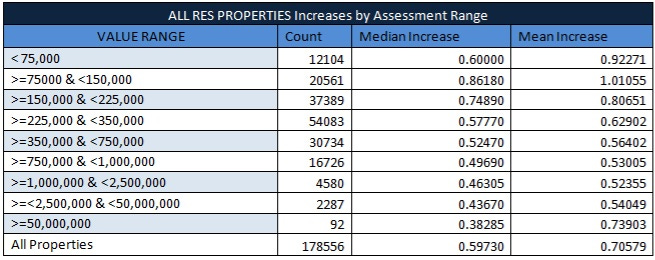
Residential median increase; 59.7%
Commercial median increase; 22.7%
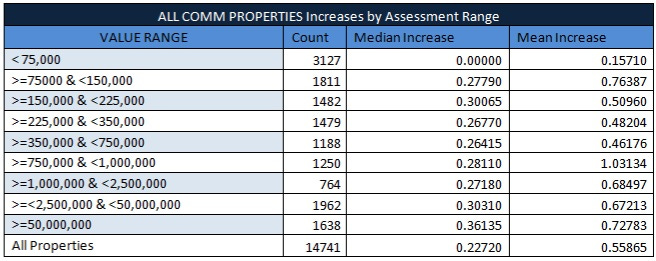
Residential values rose more than 2.5 times faster than commercial values at the median.
Within residential property itself, the increases are not evenly distributed.
Lower-value homes saw increases as high as 75% to 86%
Higher-value homes saw increases closer to 38% to 46%
That gap matters because property taxes are based on relative changes, not just total revenue. Even if officials adopt a “revenue-neutral” tax rate, the burden doesn’t stay the same, it shifts.
And based on this data, it shifts heavily onto homeowners. The lower the home value, the higher the percentage increase.
The result is predictable; homeowners, particularly those least able to absorb higher costs, will take on a larger share of the tax burden. It shifts in two key ways;
From commercial properties to residential homeowners
From higher-value homes to lower- and middle-value homes
This isn’t a theoretical concern.
“Revenue-neutral” does not mean “impact-neutral.” It means redistribution.
The question is whether that redistribution is fair.
Right now, the answer appears to be no.
I urged officials to pause.
Before moving forward, the Greensboro, High Point, Jamestown and Guilford County should;
Fully analyze and publicly explain the disparity
Show exactly who pays more and who pays less
Consider adjustments to avoid disproportionately burdening certain groups
Moving forward as-is risks locking in a system many relatively lower income homeowners and renters will experience as fundamentally unfair, and pay the price.
Related;


