
What Happens If/When Fossil Fuel Supplies Fall by 25%, 50% or 75%? With Some Current Conditions
Energy is the backbone of geopolitical, food and demographic stability

Energy is the backbone of geopolitical, food and demographic stability.
Inflation expectations are spiking, gas prices are up about 45% in four months, financial markets are correcting and sovereign interest rates are rising. The immediate cause is the ongoing conflict in the Middle East; the Strait of Hormuz disruption, tanker flows halted and an 8 mb/d supply shock that the IEA called the largest in history. A large part of the world’s energy and food delivery infrastructure has been targeted by military action.
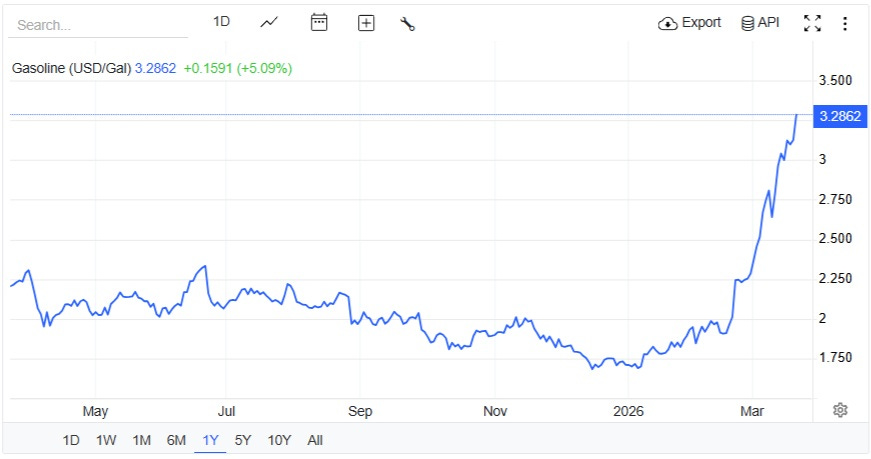
As of March 21, 2026 (roughly 3 weeks into the intensified phase of the conflict that began late February), the damage is a mix of direct physical hits, precautionary shutdowns and massive logistical paralysis.
Current Variables;
The Strait of Hormuz remains partially blocked, and tanker rerouting via East Africa and China’s overland pipelines has offset only a fraction of lost Gulf exports. IEA data last week confirmed an 8 mb/d shortfall. Markets are adjusting to what may be a semi‑permanent loss.
The U.S., China, and the EU are all releasing petroleum reserves, but depletion rates suggest these buffers can cover only 4–6 months under current draws. A coordinated global SPR refill may prove impossible.
Fertilizer ammonia (urea) prices are way up, and both Brazil and India have announced rationing of nitrogen imports. Qatar – Ras Laffan LNG hub (world’s largest): Extensive damage from Iranian missiles/drones. 17% of Qatar’s total LNG export capacity wiped out (12.8 million tons/year, repairs could take 3–5 years.), plus drops in condensate (24%), LPG (13%), etc...
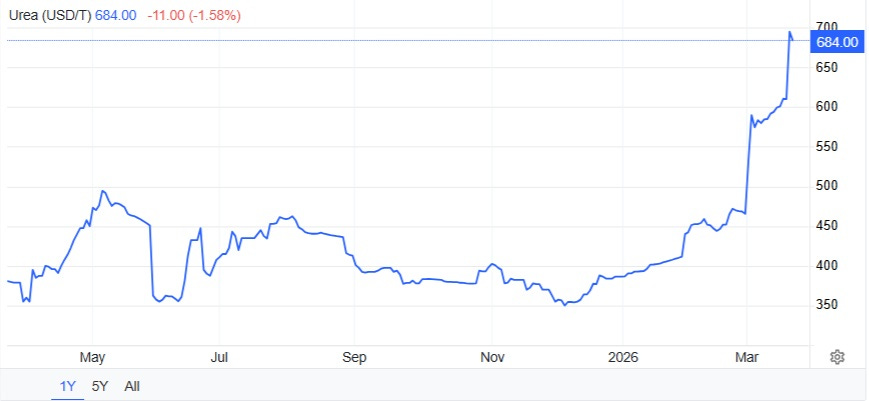
Direct infrastructure attacks (not just Hormuz) shift the risk profile toward prolonged, asymmetric damage—making military “control of flows” even more central to preserving dollar/petrodollar stability.
Actively Gasoline rationing 3/30/2026:
Bangladesh
Sri Lanka
Myanmar
Localized India
Soft rationing / restrictions:
Pakistan
Philippines
China (exports)
South Korea
At risk / warning stage:
Australia
Southeast Asia broadly
Europe
This is not a global rationing event yet; it’s a tiered rollout based on economic strength:
Tier 1 (poorer importers): ration immediately
Tier 2 (mid economies): restrict / subsidize
Tier 3 (rich economies): delay using reserves
Even though reserves can stretch things:
Around day 30–45 → global supply chains start breaking
Around day 60 → major economies begin forced demand destruction
Around day 90 → true global fuel scarcity hits everyone
FIRST TO FAIL (0–30 DAYS)
Profile:
Almost total import dependence
Minimal reserves
Weak currencies / can’t outbid others
Countries:
Bangladesh
Sri Lanka
Myanmar
Parts of Pakistan
What happens:
Fuel stations dry up first
Black markets emerge immediately
Power outages and transport collapse
These countries are already showing this behavior, so in a prolonged disruption, they don’t make it past ~2–4 weeks without severe breakdown.
SECOND WAVE (30–60 DAYS)
High-risk Asian importers with limited buffers.
Profile:
Heavy dependence on Middle East oil
Some reserves, but not large
Industrial economies → high burn rate
Countries:
Vietnam (≈85% Middle East crude dependence)
Thailand
Philippines
Indonesia
What happens:
Industrial shutdowns begin
Export manufacturing slows or stops
Governments restrict fuel (soft rationing → hard rationing)
These countries typically start breaking down around 30–50 days.
THIRD WAVE (45–75 DAYS)
Large economies with moderate reserves.
Profile:
Significant import reliance
Active diversification efforts
Some strategic reserves
Countries:
India (~60 days secured supply right now)
South Korea
Japan
What happens:
Initially stable due to reserves + contracts
Then:
Price spikes
Industrial rationing
Possible public fuel limits
These countries don’t “run out” quickly, but economic activity drops sharply by ~60 days.
FOURTH WAVE (60–90 DAYS)
Wealthy importers with strong buffers.
Profile:
Large strategic reserves
Government intervention capacity
Ability to outbid poorer nations
Countries:
European Union (Germany, France, UK, etc.)
Australia
What happens:
Heavy subsidies + reserve releases
No immediate shortages—but:
Severe inflation
Industrial curtailment (chemicals, transport, aviation)
True shortages likely after ~75–90 days if disruption continues.
LAST TO FAIL / MOST RESILIENT (90+ DAYS)
Profile:
Massive reserves or domestic production
Diversified supply chains
Countries:
China (~100–300 days depending on scenario)
United States
Russia
Middle East exporters (except war zones)
What happens:
These countries don’t run out—they:
Redirect supply
Benefit geopolitically
The U.S. in particular is relatively insulated due to domestic production
Consider what could happen if 25%, then 50% and then 75% declines in energy supply occur. Food production, mortality, long‑term population etc... It’s a stress test of our civilization’s most critical vulnerability
Public Integrity Watch ran this information though multiple AI models.
A 25% drop in global fossil fuel production over three years would be an order of magnitude larger than the 1973 OPEC embargo. It would mean losing roughly 25–27 million barrels per day of oil equivalent from today’s ~100–108 mb/d baseline.
Immediate effects;
Oil prices would likely settle in the $150–$300+/bbl range, with rationing spikes higher.
US gasoline would hit $6–$12+/gallon—far above the current $3.90 driven by the Iran war.
Headline inflation would surge 6–12%+ annually for years, as energy feeds directly into CPI and indirectly into everything else (transport, food, manufacturing). Central banks would face a brutal choice: hike rates into a recession (stagflation) or let inflation run.
The most dangerous channel runs through food.
Modern agriculture runs on fossil fuels—diesel for tractors, natural gas for nitrogen fertilizer, petroleum for pesticides and long‑distance logistics. A 25% energy supply shock would multiply fertilizer costs by 50–200%+. Crop yields in intensive systems could drop 10–25%+ cumulatively.
Fossil fuels pump groundwater for irrigation. A supply shock doesn’t just cut fertilizer — it cuts irrigation in places like the Central Valley, the Indo-Gangetic Plain, and the North China Plain.
Synthetic nitrogen (natural gas) feeds roughly half the planet.
The result would be a global hunger crisis. Excess deaths from undernutrition and related causes would likely climb into the millions per year, concentrated in import‑dependent regions of Africa, South Asia, and Latin America. Wealthier nations would face deep recessions and social strain, but the Global South would bear the heaviest human toll.
Natural gas is the primary feedstock for nitrogen fertilizer (Haber‑Bosch). A 25% decline in gas production alone would directly crater fertilizer availability, independent of oil price effects.
It’s also the marginal fuel for power generation in many regions, meaning electricity prices would surge in tandem.
Net exporters (US, Canada, Saudi, Russia) would see windfall revenues initially, though their own economies would still suffer from global demand destruction.
Highly import‑dependent industrial nations (EU, Japan, India) would face balance‑of‑payments crises, currency collapses, and potential sovereign debt defaults.
The US is now a net exporter, but its own food system remains heavily diesel‑ and fertilizer‑dependent, so it wouldn’t be immune.
At a 50% production decline, we’re talking about the collapse of the synthetic nitrogen cycle—the very foundation that allows roughly 40–50% of the world’s population to be fed.
The closest real-world analog is Cuba’s “Special Period” after 1991, when the Soviet collapse cut the island’s oil imports by 50% almost overnight. Cuban agriculture collapsed, caloric intake fell sharply, and the population lost an average of 10–15 pounds in two years. Cuba survived partly through forced localization of food production and urban gardening.
If relatively permanent, short to medium‑term excess mortality could reach hundreds of millions to low billions. Starvation, disease, and conflict over remaining resources would dominate the first 10–20 years.
Long‑term equilibrium would likely stabilize at a population level sustainable with low‑energy agriculture, localized production, and whatever modern knowledge can be retained with lower fossil inputs.
Most analyses (including those by Vaclav Smil and ecological footprint studies) put that number somewhere between 2 and 4 billion people, with a central estimate around 3–3.5 billion. That’s a 60% reduction from today’s 8.2 billion.
The numbers are best‑estimate ranges, not predictions. These are plausible outcomes based on historical analogs and biophysical constraints, not deterministic forecasts.
A 75% decline would strip the industrial system down to its barest bones. Oil, gas, and coal combined would fall to ~25 mb/d oil‑equivalent. At that level, even the most optimistic adaptation scenarios (local renewables, nuclear retention, massive dietary shifts) cannot sustain current numbers.
The long‑term carrying capacity of the planet without fossil fuels—even with retained knowledge—is generally estimated between 0.5 and 2 billion people. A realistic midpoint is 1–1.5 billion.
The gap between where we are and where we would be is measured in billions of lives and the wholesale restructuring of how we grow food, move goods, and organize societies.
If those who control the world’s reserve currency understood the risks, why would they military react first?
The US dollar’s reserve status is propped up by the petrodollar system—oil priced and traded in dollars, with surplus petrodollars recycled into US Treasuries. Disruptions to oil flows, or moves to price oil in other currencies, directly threaten that system.
The Carter Doctrine (1980) codified this: any attempt by an outside power to control the Persian Gulf would be treated as an assault on US vital interests, to be repelled “by any means necessary.”
In a severe energy‑decline scenario, a military response isn’t about producing energy—it’s about controlling remaining flows, securing chokepoints (like the Strait of Hormuz, through which ~20% of global oil transits), and preventing rival powers (China, Russia) from locking up supplies in non‑dollar denominated deals.
Military power buys time. It preserves the dollar’s “exorbitant privilege”; the ability to print the world’s paper/electronic reserve currency in exchange for real resources.
When the system is under existential threat, the first responders are not engineers, but carrier strike groups.
The Iran conflict, the gas price spikes, the inflation expectations; all of these are microcosms of what a larger, sustained decline would look like.
A 25% decline over three years would not be a manageable transition. It would be a catastrophe measured in recessions, hunger, and millions of excess deaths. At 50% or more, the very concept of “population” becomes a question of what the planet can actually sustain without the fossil subsidy that built the modern world.
This is not an argument against decarbonization. It is an argument for treating the risk of rapid supply contraction with the seriousness it deserves—by accelerating alternatives, building resilience into food systems, and ensuring that the inevitable end of the fossil era is managed rather than stumbled into.
Implications
If a 25–50% fossil fuel decline is not an abstract “what if” but a plausible stress‑case, then the current silence around it is itself a policy failure. Renewables cannot bridge this gap on the timescales involved. Solar and wind have energy densities orders of magnitude below fossil fuels, and scaling them requires copper, lithium, cobalt, and rare earths whose own supply chains take a decade or more to build out.
Treat fertilizer and food logistics as strategic infrastructure. Natural gas for nitrogen production and diesel for planting/harvesting deserve the same security attention as oil reserves.
Model the second‑order effects—not just GDP, but excess mortality, refugee flows, and the risk that the military response (Carter Doctrine) becomes the default because civilian alternatives weren’t scaled in time.
Energy volatility is no longer a sector play; it’s a systemic risk. In a severe decline scenario, traditional diversification (stocks, bonds, gold) may fail simultaneously, as the 2026 market whiplash already hints.
Food and agriculture assets will be repriced by their exposure to fuel and fertilizer costs. Long‑term value may shift toward localized, low‑input production—but the transition will be brutal.
Most sulfur (up about 98% YOY) is a byproduct of oil and gas refining. Over 80–90% of global elemental sulfur is converted into sulfuric acid for the manufacturing of fertilizers, chemical processing, and metal refining.
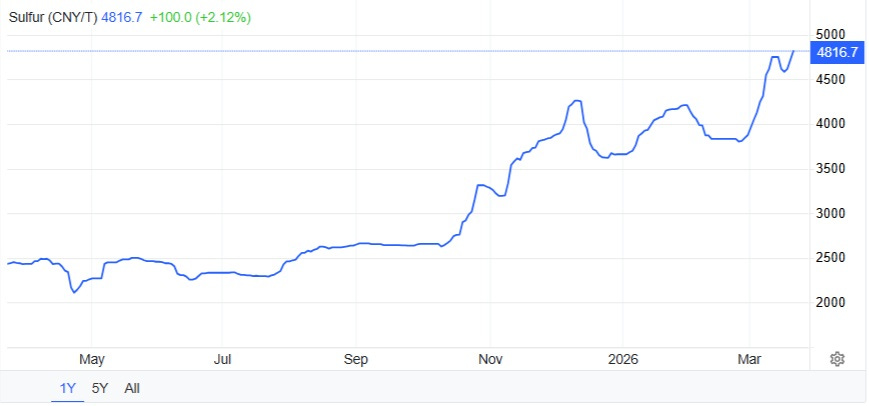
The grocery store is an oil pipeline in disguise.
The hypotheticals above are not predictions. The fact that a 25% production cut would trigger a humanitarian crisis while our current energy and agricultural systems remain almost entirely dependent on fossil inputs, suggests we are living with a level of risk we have not seriously confronted.
Additional information;
In the 1970s, the US and Saudi Arabia struck a deal: Saudi oil would be priced in dollars, and Saudi surpluses would be recycled into US Treasuries and Western financial assets, while the US provided security guarantees and arms.
Other OPEC producers broadly followed, so crude benchmarks (Brent, WTI, Dubai, etc.) and futures markets in New York and London all settled in dollars.
This gives the US “exorbitant privilege”: it can run large deficits and print the reserve currency that everyone needs for energy and trade, while also wielding sanctions via the dollar‑centric banking system.
Several groups have clear incentives to reduce oil’s dependence on the dollar:
Russia
Under heavy US and EU sanctions, it has strong motives to avoid dollar‑clearing systems and US jurisdiction. Has pushed ruble, yuan, and local‑currency settlements for its oil and gas, especially with China, India, and other non‑Western buyers.
China
World’s largest oil importer; paying in dollars exposes it to US financial power and sanctions risk. Promotes yuan‑denominated oil contracts (the “petroyuan”) via the Shanghai futures market and bilateral deals, and experiments with cross‑border payment systems outside SWIFT.
Strategically, a larger yuan role in energy trade helps build a parallel financial sphere less dependent on the US.
Iran, Venezuela, and other sanctioned states
Already pushed out of the dollar system, they trade oil via barter, euros, yuan, rupees, and local currencies, often at discounts.
Their goal is survival and sanctions evasion, but the side effect is incremental erosion of dollar exclusivity in oil.
Two things are happening at the same time:
Wars over physical control of flows (chokepoints, fields, pipelines, shipping lanes). That’s the Strait of Hormuz situation: carrier groups, missiles, drones, attacks on tankers and infrastructure.
A slower, parallel struggle over who gets to denominate and clear those flows (dollars vs alternatives like yuan/BRICS/local currencies).
The shooting war is the “hard‑power” layer of the same contest:
For the US, keeping oil flowing through chokepoints in a way that still settles largely in dollars is about preserving its ability to convert paper/electronic claims (Treasuries, bank deposits) into real resources.
Militaries move first to secure the spigots (straits, fields, terminals).
Finance/FX follows, trying either to keep the dollar oil system intact or, from the other side, to carve out non‑dollar corridors while the US is overstretched.
Three‑layer picture of the current moment:
Kinetic: who can sink whose tankers and shut whose pipelines.
Monetary: whose currency energy gets priced in.
Demographic/food: who can keep their population fed as the energy base destabilizes.
Beyond fuel scarcity, the knock‑on effects of constrained petrochemical manufacturing (plastics, rubber, lubricants) would ground much of the transport sector—even electric vehicles depend on fossil‑based supply chains for tires, seals, and resins.
Desalination, wastewater treatment, and pumping are energy‑intensive. A sustained 25–50% supply contraction could cut off clean water to hundreds of millions, accelerating disease and migration independently of food shortages.
As food and fuel prices rise, expect a chain reaction of failed states, internal repression, and regional wars. Energy scarcity often turns economics into security policy almost overnight (e.g., 1970s oil shocks triggering coups and revolutions).
Several governments are treating small modular reactors as a “second bridge.” The U.S., South Korea, and France have emergency fast‑tracking underway, but lead times remain 5–8 years.
Interest rates have jumped as energy importers scramble for dollars to cover import bills, pushing several emerging market currencies down relatively severely.
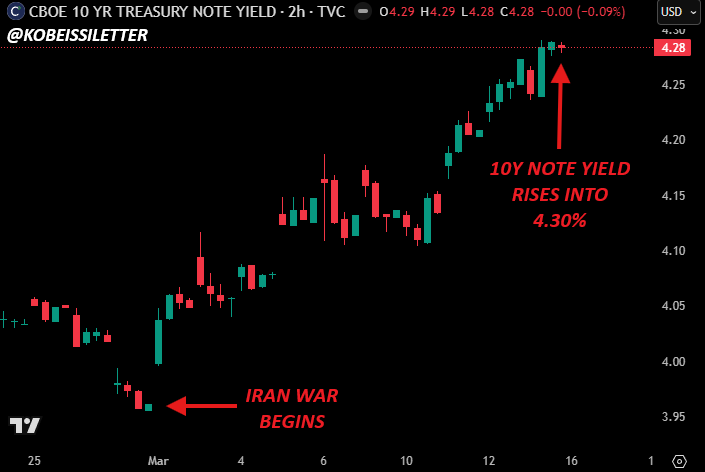
In a deeper decline scenario, this dynamic would not be a side effect; it would be one of the primary kill chains, as dollar shortages force import cutbacks that accelerate the humanitarian impact.
Related;
