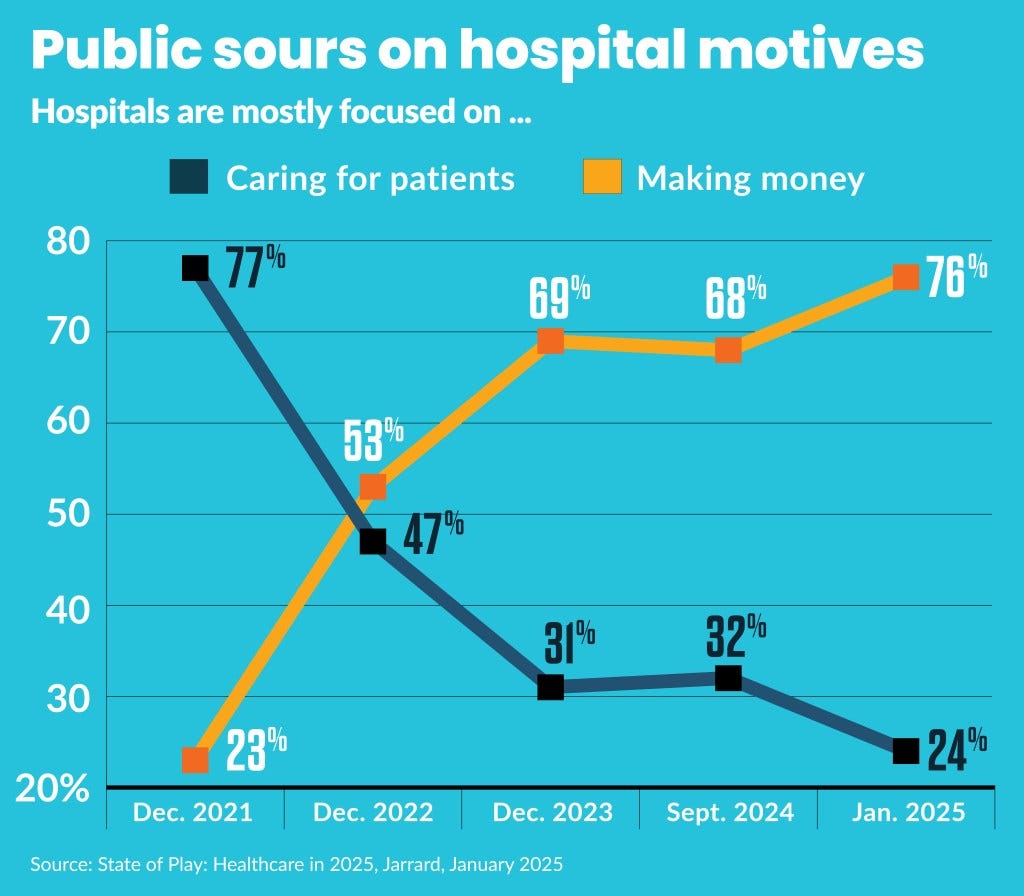
The Non-Profit Hospital Lie; How Wake Forest Baptist’s Half-Billion Dollar “Profit” Exposes a Broken System
On “Baptist’s excess revenue more than doubles through three quarters of fiscal 2025”, by the News & Record's Richard Craver

It’s a solid piece of reporting. The facts are there. The numbers are staggering.
But if you read it and felt a sense of incoherent rage, it’s because the journalism itself is trapped in the very system it’s describing. The story is reported, but its true meaning; the profound, systemic corruption it represents is left unpacked. Harm is inflicted when a family is billed into poverty, when a patient avoids care out of fear of debt, when a hospital claiming a public mission quietly amasses wealth while offering minimal charity.
The reason for this failure is a uncomfortable truth for the news industry; the entities profiting from our broken healthcare system are the same ones funding the journalism that should be holding them accountable. A system that extracts more than it heals, enriches institutions while impoverishing patients, violates the very ethic it was created to uphold. If “do no harm” still means anything, it must apply not only to clinical decisions but to the financial and moral decisions made in the boardroom.
Craver’s article does its job. It lays out the data; a 20.4% surge in revenue, a 42.5% explosion in travel nurse costs, and a comfortable $167.7 million in investment income. It dutifully explains that “excess revenue” is “profit” for a non-profit.
But it stops at the threshold of the real story. It doesn’t connect these numbers to the lived experience of its readers; the medical bankruptcy, the choice between insulin and rent, the $10,000 bill for a few stitches in the ER.
Its language is the sterile dialect of finance, not the urgent prose of a community being fleeced. The human cost is the ghost in the machine, present in every number but never named.
Turn the page of the physical newspaper, or scroll below the digital article. What do you see?
In the News & Record and its sister Winston-Salem Journal, and in virtually every local and regional paper and television news across America, you will find a dominant, deep-pocketed advertising presence; the healthcare industry.
Full-page, glossy spreads for new cancer centers. Heartwarming ads for pediatric care. Branding campaigns from massive, non-profit health systems like Atrium Health and Novant Health, assuring you of their community commitment. These are not small-budget buys. They are multi-million dollar annual contracts that form the financial backbone of local news operations.

Can a newspaper truly run a searing, sustained investigative series on the profiteering of a hospital system when that same system is one of the paper’s top five advertisers? Can a journalist be expected to frame a $543 million profit as a moral failing when the business side of the newsroom depends on that entity’s marketing budget?
The real story is that the profit motive in healthcare doesn’t just inflate your bill. It also silences the watchdogs. The same excess revenue that pays for a CEO’s bonus also pays for the ad space that ensures the system’s worst excesses are reported as business-as-usual.
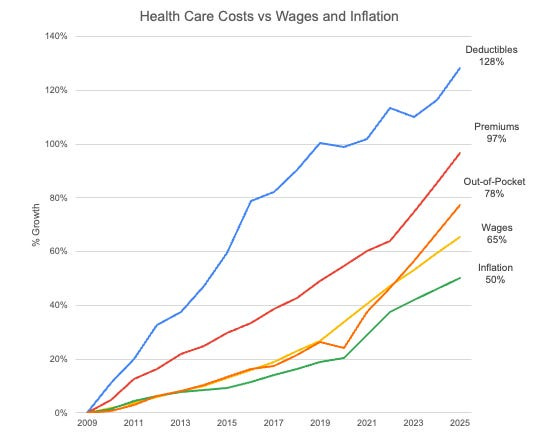
America’s healthcare system is a rip-off. We’re being played by a complex designed to confuse and extract as much money from patients and taxpayers as possible.
A tax-exempt, “non-profit” institution, dedicated to community health, has generated over half a billion dollars in profit in just nine months. And that’s more than double what it made last year.
It’s a case study in everything wrong with American healthcare.
The “Non-Profit” Shell Game
The first and most important lie to expose is the very term “non-profit.” For systems like Baptist, it’s a tax status, not a business model. It allows them to avoid paying millions in federal, state, and local taxes, under the guise of reinvesting every dollar back into their community mission.
So what is their mission? Generating a $543 million profit?
This semantic trick, calling it “excess revenue” instead of “profit”, is the shield they hide behind. But the result is the same: a massive accumulation of wealth, extracted from patients and taxpayers, that is not being used to significantly lower the cost of care.
So, what would the real story look like?
It would question how a “non-profit” can justify half-a-billion in profit while patients declare bankruptcy.
“Additional Medicaid supplemental program funding”; Read: taxpayer money. A significant portion of their profit surge is coming directly from public funds intended to care for the most vulnerable. They are profiting off the public purse.
“Growth in retail pharmacy sales”; This is vertical integration. They don’t just want your hospital visit; they want the lucrative prescription you get afterward. It’s about capturing every last healthcare dollar you have.
Wake Forest Baptist made $167.7 million from its investments. Its parent company, Advocate Health (the third-largest non-profit system in the U.S.), made a staggering $2.3 billion.
This is a hedge fund that also operates hospitals.
At every turn, the financial incentives are perverted away from the core mission of providing affordable, accessible care. The money isn’t flowing to lower prices or to adequately and permanently pay the frontline staff. It’s flowing into a vast corporate machine that is expert at growing its own wealth.
The next time you hear a hospital system claim it’s a “non-profit” community asset, remember Wake Forest Baptist’s half-billion dollar profit.
We need journalism that is not just financially literate, but morally courageous. We need newsrooms funded by their readers, not by the very corporations they must critique, so they can speak truth to power without fear of losing a crucial client.
Until then, stories like Wake Forest Baptist’s profit surge will continue to appear. They will contain all the necessary facts. But they will remain, in the most crucial sense, unreported.
This article was not sponsored by Atrium Health, Novant Health, or any other hospital system. Support independent journalism that isn’t afraid to bite the hand that absolutely should not be feeding it.