
Objection to Councilmember Adam Marshall Voting on Item G.2 (Annexation Request; Marc Isaacson for HAT Ventures LLC) on 12/16/2025
Why Adam Marshall’s land-use career and TREBIC affiliations and Isaacson contributions should bar him from the vote

The December 16 agenda includes Item G.2, a resolution to call a public hearing for the proposed annexation of 9.15 acres located at 3800 Lewiston Road and a portion of 4544 Jessup Grove Road, submitted by attorney Marc Isaacson on behalf of HAT Ventures LLC.
This vote presents a clear conflict-of-interest concern for newly elected Councilmember Adam Marshall.
1. Marshall and Isaacson Are Both Members of TREBIC
Both Adam Marshall and Marc Isaacson are members of TREBIC, the Triad Real Estate & Building Industry Coalition.
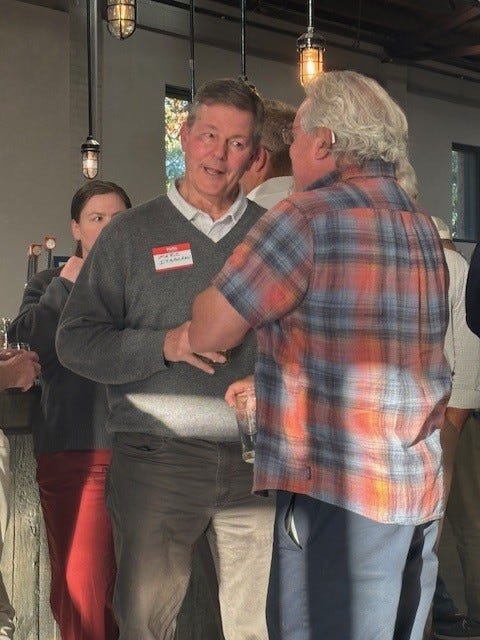
Isaacson at a TREBIC social event appreciating municipal land use staff;

TREBIC is not a casual networking group; it is an active political and lobbying organization whose mission is to advance development interests before local boards, including Greensboro’s City Council.
This means;
Marshall and Isaacson participate in the same membership organization.
TREBIC members frequently support each other’s projects, policy positions, and development priorities.
TREBIC lobbies the City of Greensboro on growth, zoning, annexations and land-use issues; the precise subject matter of Item G.2.
Another factor deepening the appearance of conflict is the close organizational link between the applicant’s attorney, Marc Isaacson, and Amanda P. Hodierne, a partner at his firm and is TREBIC’s Past Chairman. Hodierne’s leadership position within TREBIC underscores how central the organization is to the firm’s development-related work and advocacy. Because both Isaacson and Councilmember Adam Marshall are TREBIC members, and Isaacson’s own law partner led the coalition, the annexation request in Item G.2 is not merely a petition from a private attorney, it comes from a deeply embedded TREBIC leadership circle. This reinforces the perception that Marshall’s vote would benefit colleagues within a tightly connected development-political ecosystem, making recusal the only action that protects public trust.
TREBIC is a Professional Association That Involves Direct Financial Interests.
TREBIC is an organization that actively lobbies City Council on development policies
TREBIC’s explicit purpose (”uphold the preservation of constitutionally protected private property rights”) is to advocate for policies that directly benefit its members financially
TREBIC members directly profit from annexations and rezonings; that’s literally the point of the organization
When Marshall (Council member) votes on an annexation presented by Isaacson (attorney), where BOTH are TREBIC members;
They are part of an organization with shared financial interests in getting development projects approved
The organization exists specifically to influence these outcomes
Both benefit professionally from a pro-development climate that TREBIC advocates for
If TREBIC members sit on Council and vote on applications presented by fellow TREBIC members, the organization effectively controls both sides of the approval process.
2. Marshall’s Professional Practice Overlaps With the Subject Matter
According to Marshall’s professional resume, his practice areas include;
Land Use and Zoning
Real Estate
Community/Planned Community Association Law
Corporate Law
Debt Collection
He lists past service on the Board of Adjustment and Zoning Commission, including a term as Chair.
The annexation and development approval process is directly intertwined with his professional work and the interests of TREBIC’s membership. This amplifies the appearance that voting on a TREBIC peer’s petition could create a conflict between his public duty and the expectations of the professional community from which he comes.
3. NC Ethics Standards Require Recusal When “Impartiality May Reasonably Be Questioned”
Under N.C. Gen. Stat. § 160A-86, city officials must avoid not only actual conflicts, but also the appearance of improper influence.
The standard is not whether there is corruption.
The standard is whether a reasonable member of the public could believe the official’s impartiality is compromised.
Under G.S. 160A-86, the City Council is required to adopt and follow a Code of Ethics that places clear obligations on every member. The statute mandates that council members must “act with integrity and independence from improper influence,” “avoid impropriety in the exercise of your official duties,” and ensure that their actions are “above reproach.” These standards go beyond the minimum legal requirements and are designed to protect public confidence in land-use decisions. When a council member has a close professional or associational relationship with the applicant’s representative, as in the case of Adam Marshall and fellow TREBIC member Marc Isaacson, the appearance of influence alone is enough to conflict with the ethical duties imposed by G.S. 160A-86, even when the stricter statutory prohibitions of §160D-109 may not be triggered.
A TREBIC member voting on a TREBIC peer’s annexation request squarely meets that threshold.
Direct Financial Relationship
Marc Isaacson made TWO campaign contributions totaling $500 to Adam Marshall;
February 2, 2025: $250
June 26, 2025: $250
Policy B-22 Violation; Section 5.6 prohibits participation when someone with “a financial or other interest in the firm selected” has a relationship with the officer.
Even if there’s no quid pro quo, Policy B-22 explicitly covers “real or apparent” conflicts. A $500 donor asking for favorable treatment on an annexation obviously creates an apparent conflict. A campaign donor who are both lawyers and belongs to TREBIC with the candidate creates an associational relationship.
This is exactly the kind of pay-to-play politics these policies are designed to prevent.
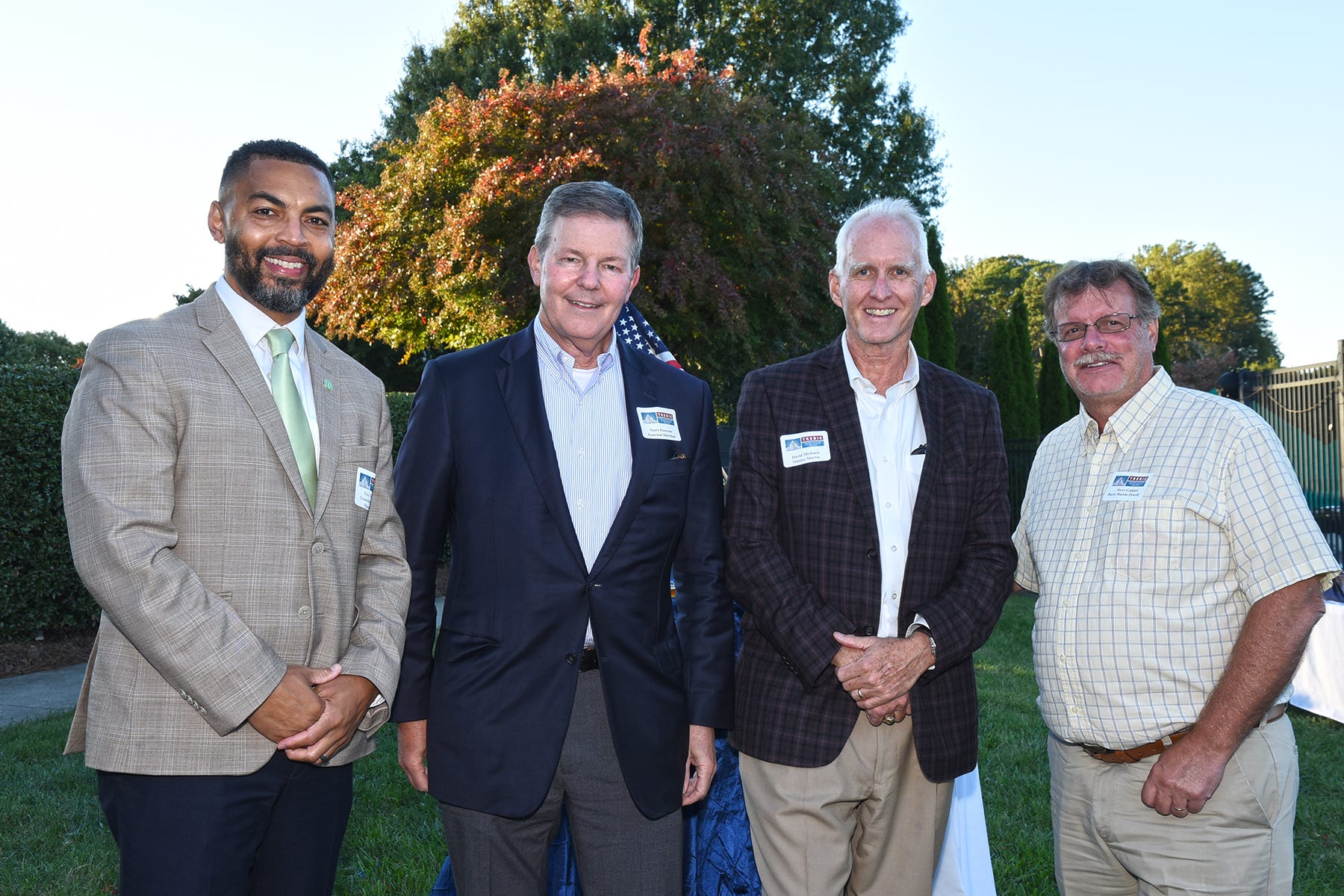
Marc Isaacson with Greensboro City manager Trey Davis at a TREBIC event;
4. Annexation and Zoning Cases Carry Heightened Expectations of Impartiality
Annexation requests are not routine administrative acts, they create:
development rights
infrastructure obligations
tax implications
land-use expectations for the surrounding community
When elected officials are tied to the organizations advocating for the applicant, the process becomes compromised in the eyes of the public.
5. Recusal Is the Cleanest Solution
This is not a personal criticism of Councilmember Marshall.
It is a structural conflict rooted in;
his TREBIC affiliation,
the applicant’s TREBIC affiliation,
his land-use legal practice, and
the public’s right to a process free from doubt.
To preserve confidence in the integrity of the Council’s decision-making, Councilmember Marshall should recuse himself from Item G.2.
TREBIC Officers & Board Members Who Are Adam Marshall Contributors;
Richard Vanore (Koury Corporation): Contributor ($2,500) // TREBIC Secretary.
Will Yearns (Granville Homes): Contributor ($500) // TREBIC Treasurer and Vice Chairman.
Scott Wallace (Keystone Group): Contributor ($1,000) // TREBIC Board of Directors.
Adam Carroll (Timmons Group): TREBIC Chairman (his company is a major TREBIC member).
TREBIC Member Companies Whose Principals Are Contributors; (Partial List)
Koury Corporation (President Level): Executives contributed $6,000.
Signature Property Group Inc. (Governor Level)
Law Firm Carolinas (Mayor Level): Multiple attorneys contributed over $3,000.
Samet Corporation (Governor Level): Arthur Samet contributed $500.
BSC Holdings (Senator Level): Barry Siegal contributed $1,000.
Collins and Galyon (Senator Level): Two individuals contributed $350.
Fourth Elm Construction (Mayor Level): Two individuals contributed $525.
3. Industry-Wide Alignment:
The NC REALTORS PAC contribution ($3,000) aligns with TREBIC’s affiliated associations.
The contributor list reads like a roster of TREBIC’s membership, spanning developers, builders, realtors, attorneys, engineers, and executives from all membership levels (President, Governor, Senator, Mayor).
Adam Marshall’s 2025 campaign was financially supported by a substantial segment of the TREBIC coalition. This indicates his candidacy is seen as favorable or aligned with the policy, regulatory, and economic interests of the organized real estate and building industry in the Triad region. The contributions are not random but are structured through the network of a specific, influential industry group.
Related;
