
How Guilford County and Local Media is Selling a 19% Property Tax Increase as a “Rate Cut”
Guilford County’s Budget Raises Property Taxes by Roughly $101 Million After Revaluation

Greensboro’s News & Record;

The News & Record’s May 8 article on Guilford County’s proposed FY2027 budget repeatedly emphasizes the proposed tax rate reduction while omitting or understating some of the most consequential financial realities.
The article never tells readers the most important numbers in the budget.
The headline itself framed the issue primarily around;
“Guilford County budget lowers tax rate…”
before acknowledging;
“…but bills may still rise after revaluation.”
But the County’s own budget proposal says;
FY2026 property tax revenue; roughly $542.4 million
FY2027 projected property tax revenue; about $643.8 million
= approximately +$101 million, or about +19% in additional property tax.

Page 71;
https://www.guilfordcountync.gov/fy2027-recommended-budget-book/open
The story centers on the reduction from 73.05¢ to 61.9¢, and the proposal being “8.64 cents above revenue neutral.” It’s not actually from revenue neutral and it’s not 8.64 cents.
The “Revenue Neutral” Problem
The article says “The revenue-neutral rate is 53.26 cents per $100 of property valuation.” Most readers would reasonably interpret that sentence to mean “53.26¢ keeps revenues flat.”
But Guilford County’s own budget tables show the exact mathematically levy-neutral rate after reassessment was actually 52.00¢.
Page 72;
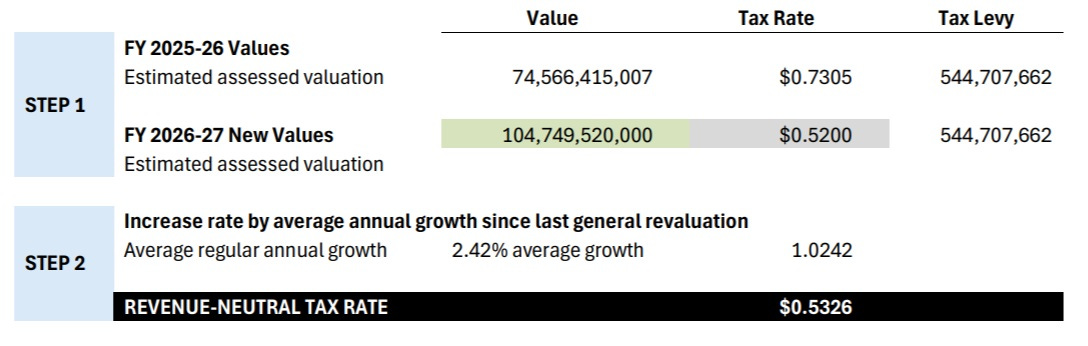
52¢ was the rate that actually kept revenues flat after revaluation.
“This recommendation is 8.64 cents above that level because responsiveness and quality service delivery does not maintain itself,” Isler said.
The County then applied a built-in 2.42% “historical growth” adjustment, which increased the official statutory “Revenue Neutral Tax Rate” (RNTR) to; 53.26¢.
61.9¢ - 52¢ = 9.9¢, not 8.64 cents
53.26¢ ≈ $13.2 million in additional property tax collections before the proposed increase to 61.9¢ even began.
The article never explains this.
So readers are left with the impression that 61.9¢ is only modestly above a truly flat-revenue tax rate, when the proposal is actually roughly 19% above exact levy neutrality for property taxes.
WFMY’s Tanya Rivera says;
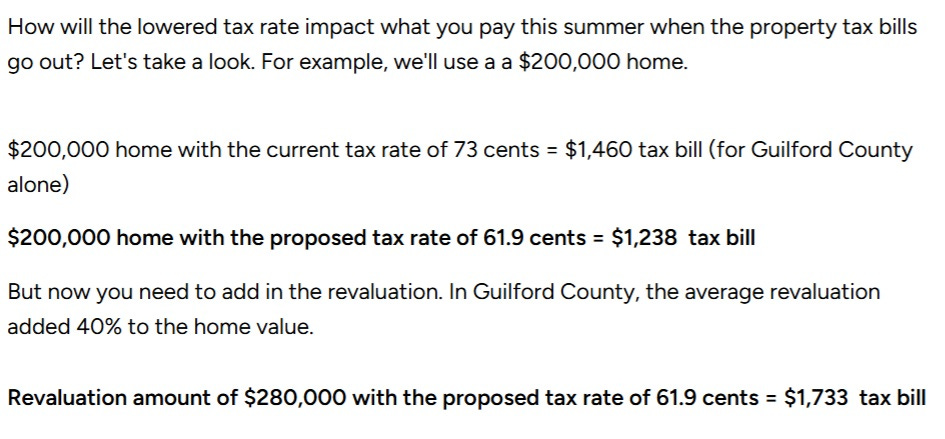
A $200,000 home, reassessed upward by 40% to $280,000, resulting in a county tax bill increase from $1,460 to $1,733?
Totally misleading
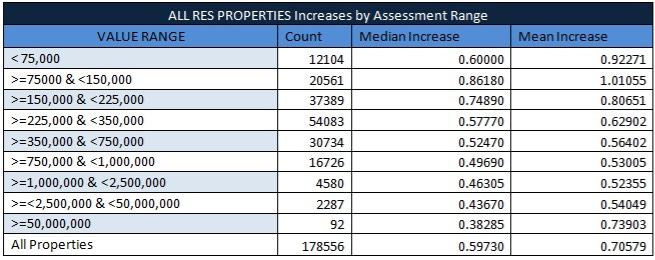
The average residential home went up 59.7%, per Guilford County, but the average $200,000 home went up 74.89%, not 40%;
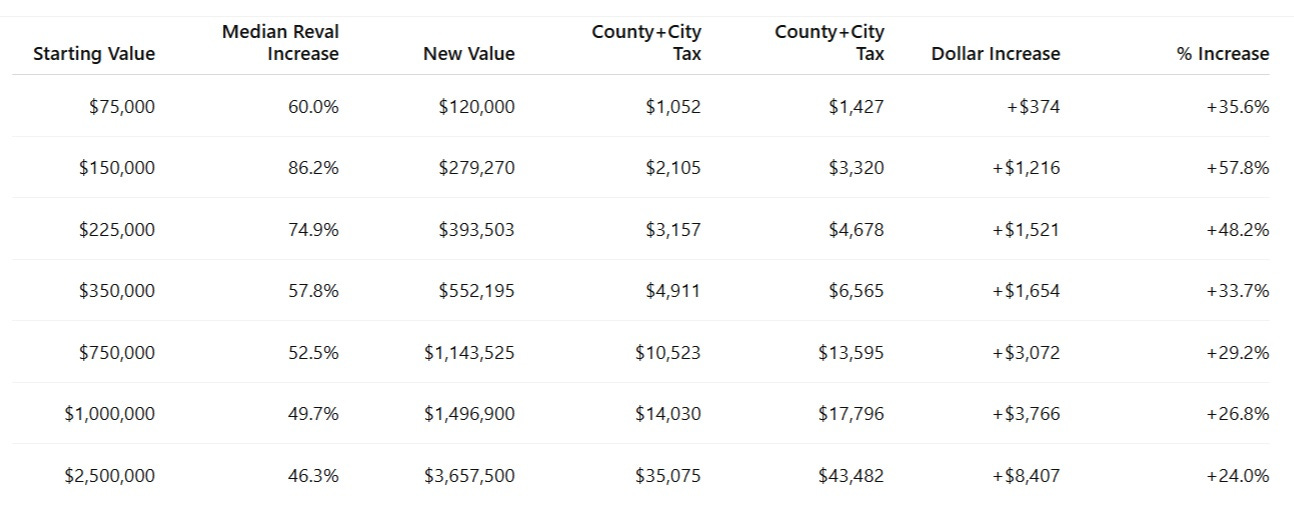
If the City of Greensboro raises taxes as much as Guilford County wants to;

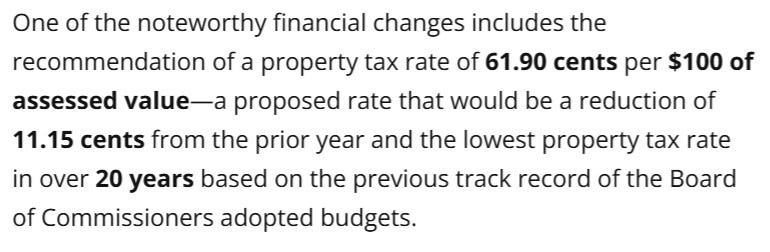
WFMY repeatedly emphasized the nominal rate reduction, and Guilford County potentially no longer having “the highest property tax rate in the Triad.”
But taxpayers do not pay tax rates. They pay tax bills.
WXII mentions Guilford County Schools funding;
https://www.wxii12.com/article/guilford-county-budget-school-funding-increase-nc/71244345
The School Debt Context Is Almost Entirely Missing;
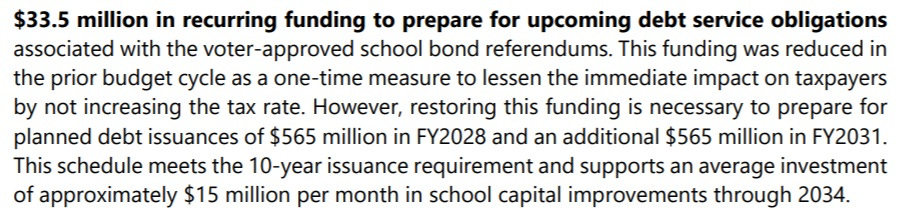
The County’s budget increases K-12 funding by roughly $58.5 million, necessary to prepare for $565 million in school debt issuance in FY2028, and another $565 million in FY2031. That’s about $1.13 billion in future school-related borrowing not one local news source disclosed.
ABC45’s Christian Gladney repeats Guilford County Manager Victor Isler’s propaganda;
Victor Isler, who serves as the county manager, outlined the details of this $935 million proposed spending plan—an increase of approximately 10.4% in comparison to last year’s finalized budget.
Without mentioning the 19% property tax hike.
And the same meaningless;
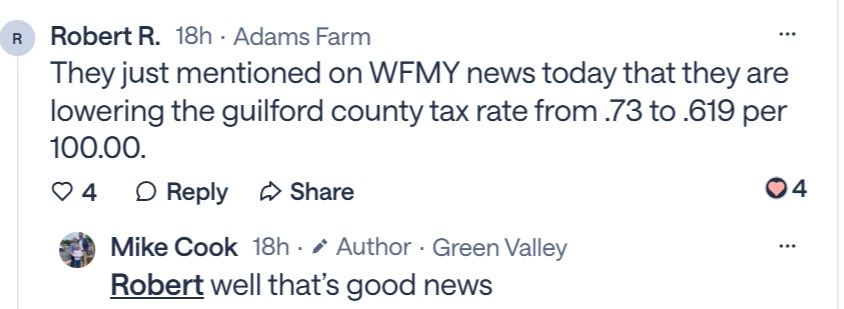
The narrative appears to be having the intended effect;
The Residential vs. Commercial Shift Is Missing Entirely
Our local news media has never explained how residential property values increased dramatically faster than commercial property values. County reassessment data showed;
residential median increases roughly +59.7%
while commercial median increases roughly +22.7%.
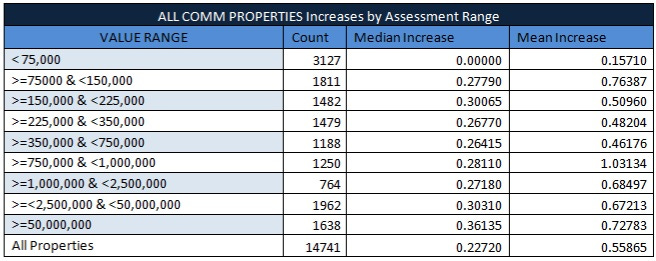
Lower-value residential homes experienced some of the largest increases in the County, while most commercial properties would get tax cuts at Guilford County’s 42.5% average;
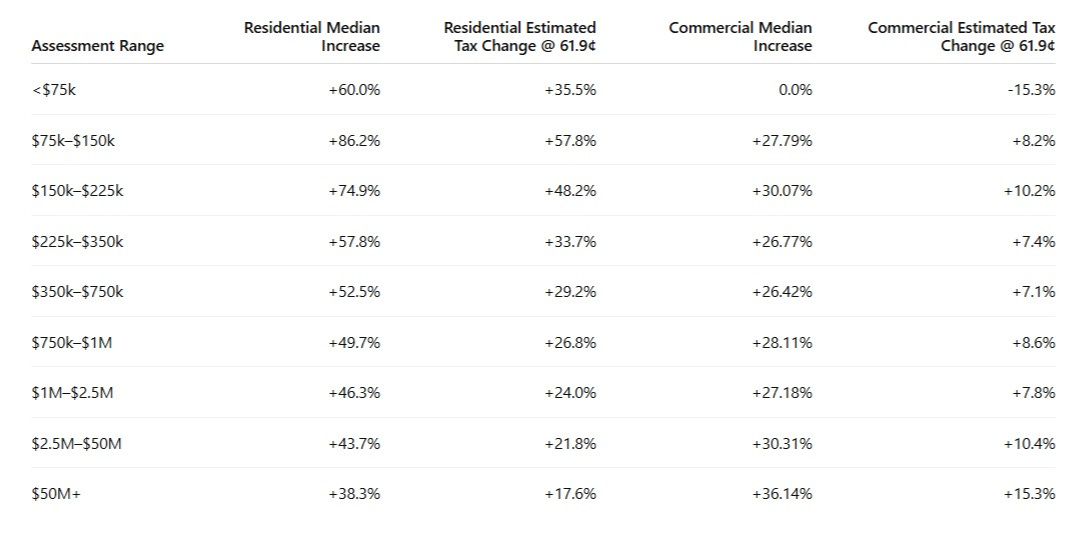
Meaning, even before the proposed increase above neutrality, the reassessment itself shifted a larger share of the property-tax burden, ≈ +5.7 of the County tax base share, onto homeowners, which works out to a ≈ +8.8% relative increase on residential from commercial.
Instead of clearly explaining a projected ≈ $101 million increase in property tax collections, a reassessment-driven shift of the tax burden toward homeowners, and roughly $1.13 billion in future school-related borrowing, much of the local coverage focused almost entirely on “lowest rate in 20 years” talking points, and statutory “revenue neutral” language most would interpret as meaning taxes stay flat.
Taxpayers do not pay lower tax rates.
We pay taxes.